If your car AC stops blowing cold air in La Puente, start by checking the simplest things first: the cabin air filter, refrigerant level, and fuse box. Many car AC problems have basic causes you can spot yourself before spending money on a shop visit. That said, some repairs need a certified technician to handle refrigerant safely and legally.
Why Car AC Problems Are Common in the San Gabriel Valley
La Puente and the surrounding communities sit in the San Gabriel Valley, where summer temperatures regularly climb into the 90s and beyond. Neighborhoods in La Puente, Rowland Heights, and Hacienda Heights share the same inland heat that pushes car AC systems hard every year. Constant high demand wears down compressors, condenser coils, and seals faster than in cooler coastal cities. That is why local drivers deal with car AC issues more often than people expect.
Basic Checks You Can Do Yourself
Before calling anyone, run through this simple checklist. These steps cost nothing and can save you a service visit.
- Check the cabin air filter. A clogged filter blocks airflow. It is usually behind the glove box and takes about five minutes to swap out.
- Look at the AC fuse. Find your car owner manual. Locate the fuse box. Pull the AC fuse and check if the wire inside is broken. Replace it with a matching amp fuse if it is blown.
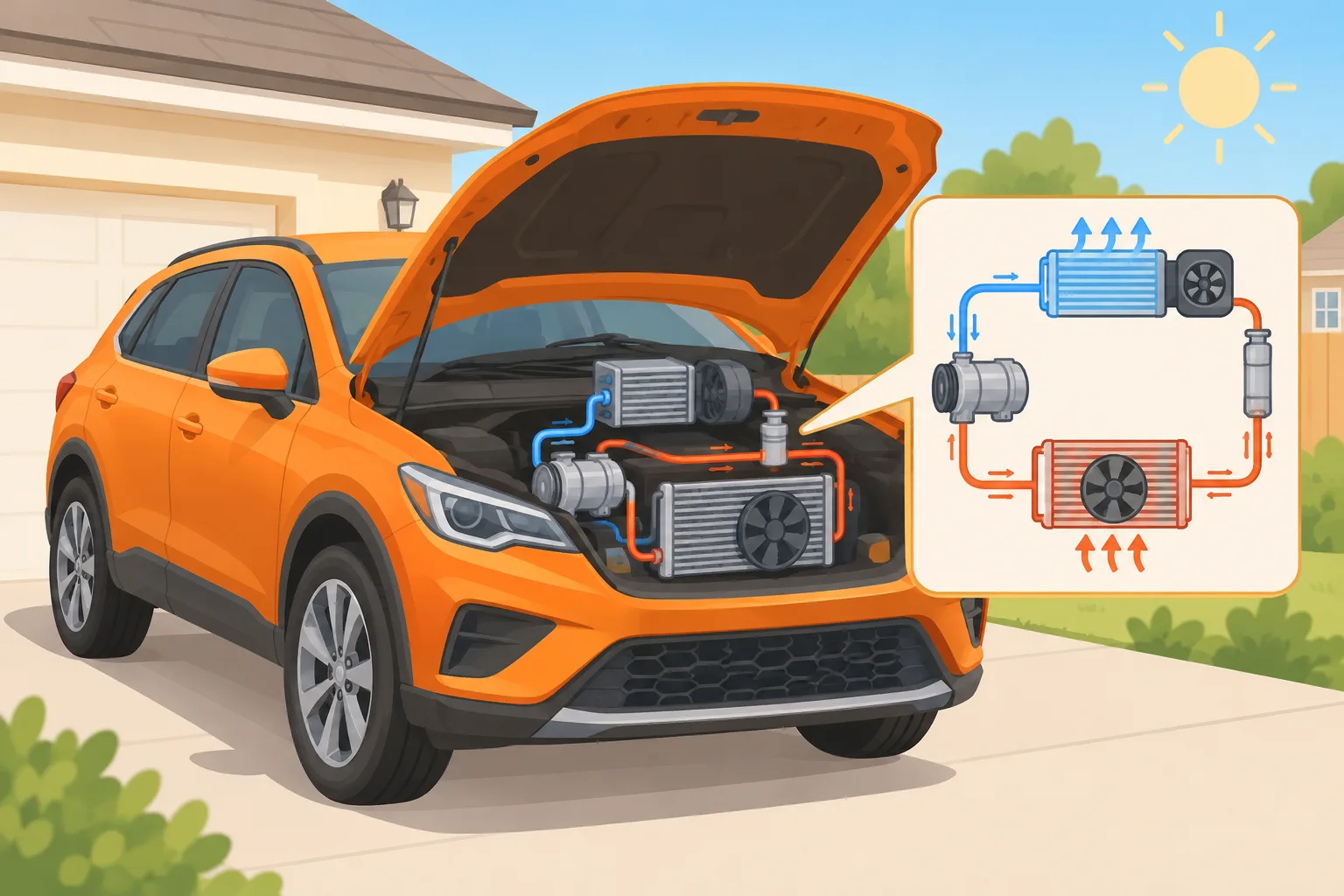
- Check refrigerant pressure. You can buy a simple gauge kit at an auto parts store. Low pressure usually means a refrigerant leak.
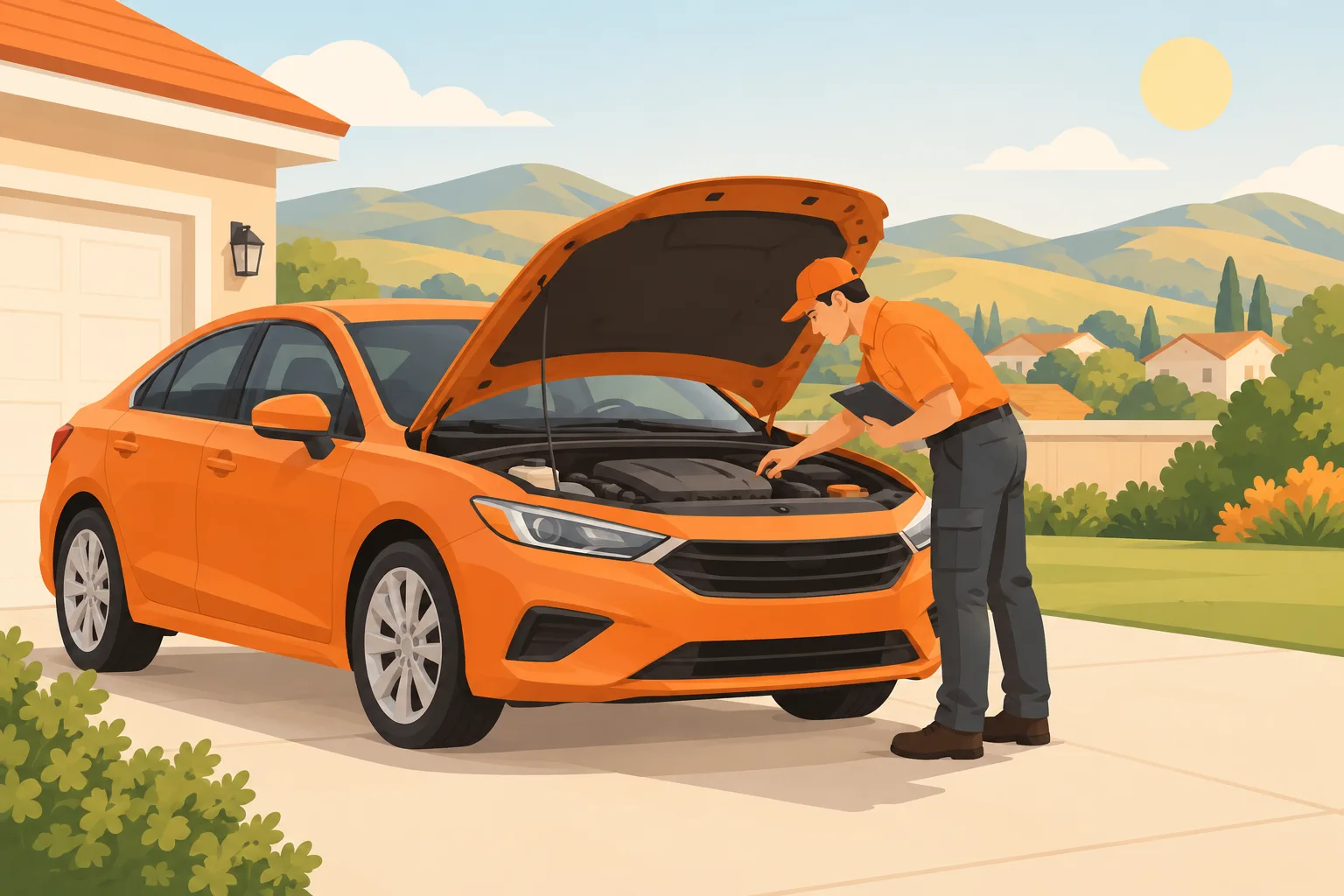
- Inspect the condenser. Open the hood. The condenser sits in front of the radiator. Look for bent fins or debris blocking airflow.
- Turn the AC on and listen. A clicking or rattling noise when the AC kicks on often points to a failing compressor clutch.
Repairs You Can Attempt at Home
Some car AC fixes are within reach for a handy homeowner with basic tools and patience.
- Recharging refrigerant. If pressure is low and there is no major leak, an AC recharge kit from an auto parts store can restore cooling temporarily. Follow the kit directions carefully. Do not overcharge the system.
- Replacing the cabin air filter. This is easy and cheap. Buy the correct filter for your car model and slide it in.
- Replacing a blown fuse. Simple and fast if the fuse is the only problem.
- Cleaning the condenser. Use a garden hose on low pressure to rinse debris off the condenser fins. Let it dry before starting the car.
If the system still blows warm air after these steps, the problem is deeper. At that point, a licensed auto technician needs to diagnose it properly.
When to Stop DIY and Call a Professional
Some car AC repairs are not safe or legal to do yourself. Refrigerant handling requires EPA certification. If your system has a leak, simply recharging it pushes refrigerant into the air, which is harmful and against federal law. Here are signs you need a pro right away.
- The AC blows cold for a few minutes then turns warm, which often means a failing compressor.
- You hear a loud grinding noise when the AC runs.
- You see ice forming on the AC lines under the hood.
- Water is dripping inside the car, not outside, which suggests a clogged drain line.
- You smell a musty or chemical odor coming from the vents.
Drivers across West Covina, Diamond Bar, and Pomona often push car AC issues off until the heat becomes unbearable. Getting ahead of a small problem saves money compared to a full system replacement later.
How Home HVAC Maintenance Connects to This
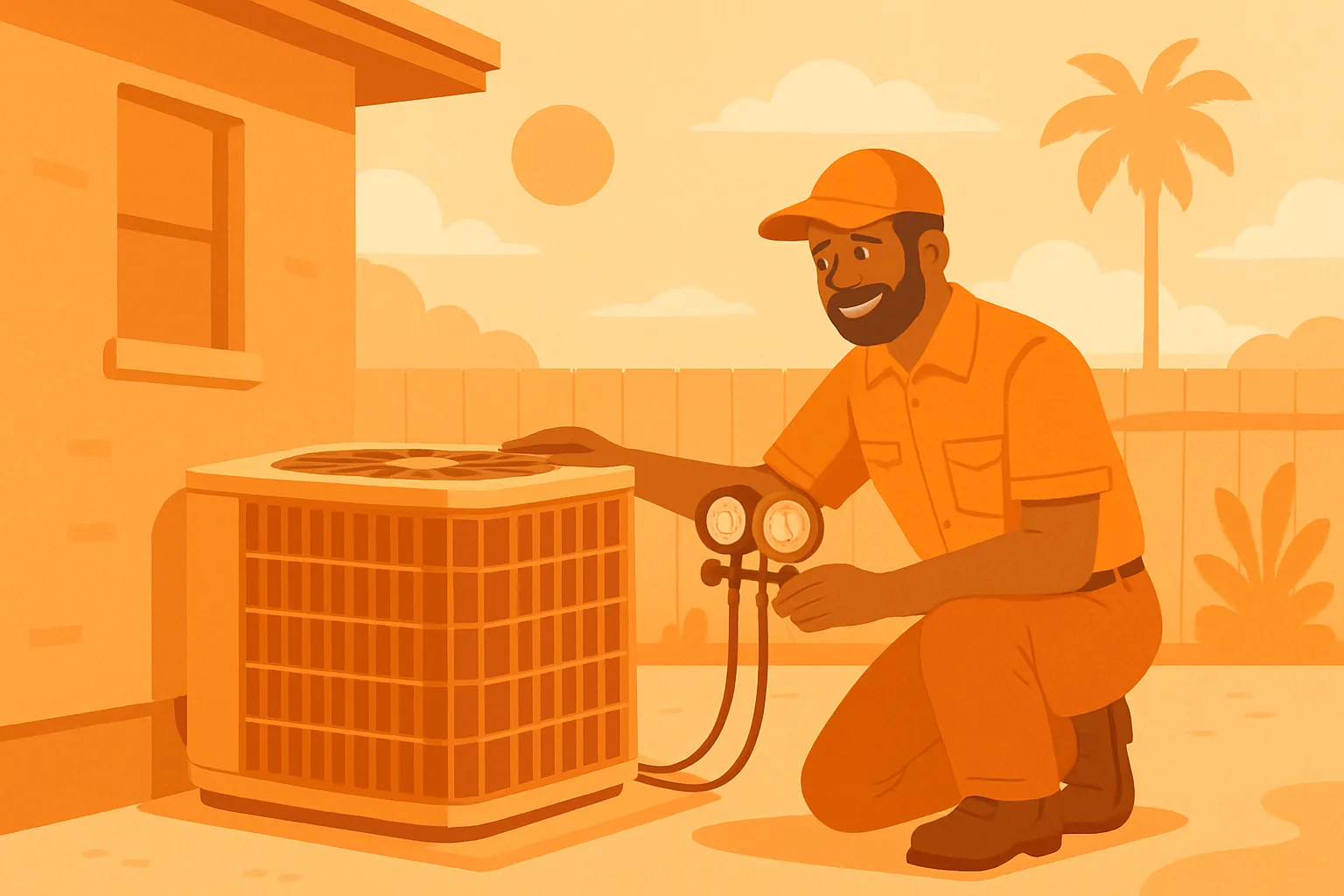
While Air CareSaver handles residential and commercial HVAC systems rather than auto AC, many homeowners in La Puente ask us about both. The cooling principles are similar. Refrigerant leaks, dirty coils, and clogged filters cause the same kind of failures in home systems as they do in vehicles. If your home air conditioner is also struggling this summer, our team offers AC repair for homes across the area. Residents in Chino Hills, Covina, and La Habra Heights count on us to keep their home systems running through the hottest months. We also offer maintenance plans that catch small problems before they become expensive repairs, the same logic that applies to staying on top of your car AC.
Tips to Keep Your Car AC Running Longer
Prevention is always cheaper than repair. These habits help your car AC last longer in the inland heat.
- Run the AC for a few minutes every week, even in cool weather, to keep seals lubricated.
- Park in shade whenever possible to reduce cabin heat load.
- Replace the cabin air filter every 15,000 miles or once a year.
- Have a certified auto technician inspect the AC system each spring before summer hits.
- Do not set the AC to the coldest setting immediately. Let the car air out first by opening windows for a minute.
Questions Homeowners Ask
Can I recharge my car AC myself?
Yes, if the system only needs a small refrigerant top-off and there is no active leak. DIY recharge kits work for minor low-pressure situations. If the system has a leak, you need a certified technician to find and fix it legally.
How long does a car AC repair take?
Simple fixes like a fuse or filter take under 30 minutes. A compressor replacement can take several hours at a shop. Getting a diagnosis first helps you plan your time and budget.
Why does my car AC smell musty?
Mold and mildew build up on the evaporator coil inside the dash when moisture collects. Running the fan on high without AC for a few minutes after each trip helps dry it out. A shop can also spray an evaporator cleaner through the system.
Does Air CareSaver repair car AC systems?
No, Air CareSaver focuses on residential and light commercial HVAC systems for homes in La Puente and surrounding communities. For car AC, visit a licensed auto repair shop. For your home cooling system, we are ready to help.
If your home AC is struggling this summer alongside your car, do not wait. Homeowners in La Puente, South San Jose Hills, Brea, and across our service area can request a free quote today from Air CareSaver. Our team is ready to help with residential air conditioning repair so your home stays cool no matter how hot it gets outside.